
Short answer: A missing kickout flashing, a small bent piece of metal about the size of your hand, can rot the wall behind your siding for years before you see a thing. It belongs where a roof edge runs into a wall. Without it, every rain sends roof water straight down inside the wall instead of into the gutter.
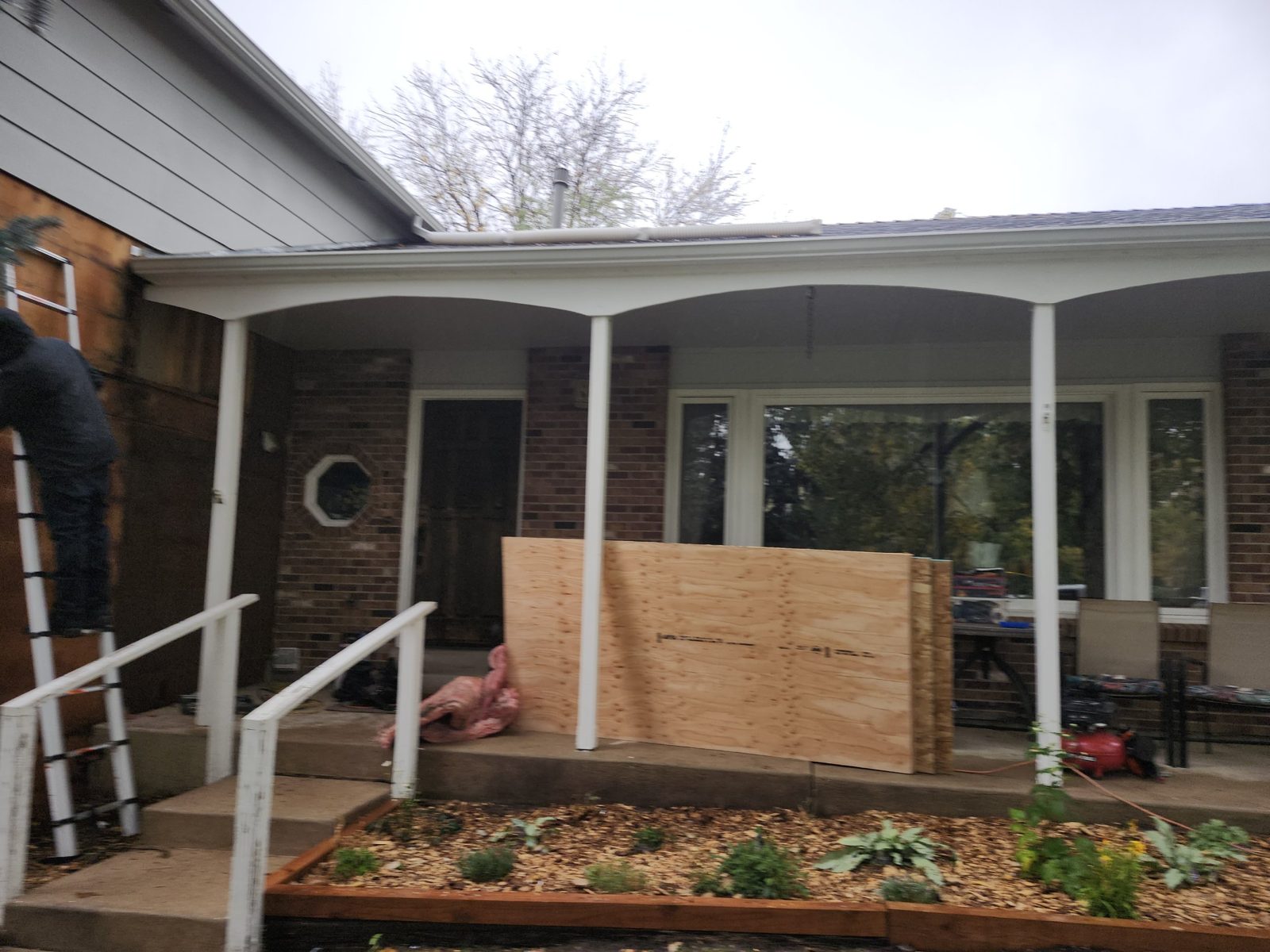
What Is Kickout Flashing?
Kickout flashing (also called diverter flashing) is a piece of metal at the bottom end of a roof-to-wall joint. Picture a porch roof, a garage roof or a lower roof that butts into a taller wall. Water running down that roof travels along the wall. At the bottom, the kickout turns it outward, into the gutter and away from the house.
It works together with step flashing, the row of small L-shaped metal pieces woven in with each course of shingles up the wall. Step flashing keeps water off the joint. The kickout handles the last few inches where all that water collects.
How One Missing Piece Destroys a Wall
Without a kickout, the water coming off that roof edge doesn’t hit the gutter. It runs behind the end of the gutter and down the face of the wall, and it finds every gap in the siding on the way. Here is how it usually plays out:
- Year 1–2: Water soaks the sheathing behind the siding every time it rains or snow melts. Nothing shows outside.
- Year 3–5: The sheathing and framing stay wet long enough to rot. Insulation in the wall gets soaked and stops working.
- Year 5+: Mold grows inside the wall cavity. The bottom plate and studs soften. By the time paint peels or a stain shows up inside, the repair often means removing siding, sheathing and framing, not just adding a piece of metal.
Siding hides it. Fiber cement, vinyl and brick veneer can all look fine from the outside while the wall behind them rots. That is why this problem is so expensive: it gets found late.
Why It Gets Left Off
- Re-roofs that skip the metals. Some crews reuse old flashing or leave it out to save time. If the kickout wasn’t there before, nobody adds it.
- Siding jobs and roof jobs done by different trades. The kickout sits right where roofing and siding meet, so each trade assumes it’s the other one’s job.
- Older homes. Many Front Range homes were built before kickout flashing was common practice. The International Residential Code now requires it where a roof eave meets a sidewall (section R903.2.1).
Signs You Might Be Missing Kickout Flashing
Walk around your house and find every spot where a roof edge stops against a wall. Look for:
- No metal piece angled out toward the gutter at the bottom of the joint
- Dark streaks, stains or algae on the siding below that spot
- Swollen, soft or cracked siding near the bottom of the wall
- Peeling paint or caulk that keeps failing in the same place
- Water stains, musty smell or mold on the inside wall behind that corner
- Gutters that end short of the wall, so water pours down the siding
If you see any of these, have the wall checked before the next freeze-thaw season. Colorado snow sitting on a lower roof melts slowly against the wall, so this joint takes on water for days at a time.
How We Fix It
A kickout on its own is a small part. The cost depends on how long it has been missing. Our process:
- Open the siding at the roof-to-wall joint and check the sheathing and framing with a moisture meter.
- Replace any rotted sheathing or framing and dry-in the wall with new weather barrier.
- Install new step flashing and a kickout, lapped correctly over the weather barrier so water can’t get behind it.
- Put siding back on with the right clearance above the roof, then check the gutter catches the water.
Every roof replacement we do gets all new metals and flashing, including kickouts wherever a roof meets a wall. We also handle siding and wall repairs under the same contract, so the joint between the two trades doesn’t fall through the cracks.
We do this work across Northern Colorado, including roof repair in Fort Collins and our full Fort Collins general contractor services.
Frequently Asked Questions
What is kickout flashing?
Kickout flashing is a piece of metal installed at the bottom of a roof-to-wall joint, where a roof edge meets a sidewall. It turns water outward into the gutter so it doesn’t run down inside the wall.
Is kickout flashing required by code?
Yes. The International Residential Code (section R903.2.1) requires kickout or diverter flashing where a sloped roof eave meets a sidewall. Many older homes were built before this was standard practice.
How do I know if my wall has water damage from missing flashing?
Look below any roof-to-wall joint for stains, streaks, swollen or soft siding, peeling paint, or mold and water marks on the inside wall. Siding often hides damage, so a moisture meter check or opening the siding is the only way to know for sure.
Can I just add kickout flashing to an existing roof?
Usually yes, but the bottom courses of siding and shingles have to come off so the kickout can be lapped correctly under the step flashing and over the weather barrier. That also lets the contractor check whether the wall behind it is already wet or rotted.
Does homeowners insurance cover rot from missing flashing?
Most policies exclude long-term leaks, rot and installation defects. Damage from a sudden event like a storm may be treated differently. Check your policy and ask your agent.
Get That Roof-to-Wall Joint Checked
Josh Brooks Construction and Renovation Inc. is a licensed general contractor in Longmont with 30 years in construction. We inspect roof-to-wall flashing for free across the Front Range. Call 720-828-7997 or text 720-453-5095.
Licensed. Local. Not a storm chaser.


